Welcome
Did you lose a parent – or both parents – to death before you turned 20?
Are you an adult now?
Do you encounter difficulties in your life that you often find hard to understand?
Do you wonder why you are the way you are and act the way you do?
In the Netherlands, we have developed expertise that can help you too: ‘Verlaat Verdriet’ (Delayed Grief), knowledge gained from experience.
As the term ‘Verlaat Verdriet’ is difficult to translate, we always use the Dutch term ‘Verlaat Verdriet’ in the translation.
The ‘Verlaat Verdriet’ Knowledge Centre aims to disseminate the experiential knowledge developed in the Netherlands to our target group worldwide.
What does the ‘Verlaat Verdriet’ Knowledge Centre mean by ‘Verlaat Verdriet’?
- You lost your parent(s) to death before the age of 20;
- The lifelong impact of the early loss of your parent(s) on your life today;
- In the Netherlands, knowledge has been developed regarding ‘Verlaat Verdriet’. We realise that this knowledge is not available worldwide. That is why we would like to share our knowledge with you. We have translated a number of pages for you so that they are also directly available to you.
Read about the lifelong impact of losing your parent(s) in childhood.
Do you recognise yourself in this? Take a printout to your counsellor.
Do your own research. Make use of the Self-Help Tips.
Points to note
- These texts are the intellectual property of the developer: Titia Liese.
- The full copyright of these texts rests with the ‘Verlaat Verdriet’ Knowledge Centre.
- The texts may be used for our target group, but expressly not for commercial purposes.
Kenniscentrum Verlaat Verdriet
Titia Liese and Stephanie Braggaar
With thanks to our language advisors
Manifesto
From Lingering Sorrow to Letting Go of Sorrow
It can happen anywhere, and at any time. And it does happen anywhere, and at any time. Ever since the dawn of humanity, there have been children who have lost one or both parents to death during their childhood. Perhaps you yourself lost a parent or parents while growing up. Or maybe your partner lost a parent. Take a look around your own family. Did it happen to one of your parents? Both of your parents? Look a little further into your family. Your grandmother? Your grandfather? Uncles? Aunts? Cousins? Do you know any friends in your circle who lost their parent(s) at a young age? Colleagues at work?
More than a million
Around 13% of adults in the Netherlands lost one or both parents to death during their childhood, before the age of 20. That means that in the Netherlands, well over a million adults have lost a parent to death. You may not have known that. For the vast majority of adults who lost a parent in their youth, the loss they experienced is one that is still hushed up. They have learnt not to talk about it. Or they do not link the difficulties they are struggling with to the early death of their parent(s). They would rather not talk about delayed grief.
Mental and physical well-being
This has to change. It can change. Many adults recognise that keeping silent about profound, life-changing experiences from one’s youth – and this certainly includes the irreversible loss of a parent or parents – is unhealthy for one’s mental and physical well-being.
´Verlaat Verdriet´
We, the experts by experience at ‘Verlaat Verdriet’, focus on the grief of losing a parent at a young age. We do this primarily as peers for adults who lost a parent to death during their childhood. In addition, we focus on care professionals, academic researchers and anyone interested in the long-term consequences of losing a parent at a young age. We focus on the complexity of Late Grief issues in the present, and on the specific dynamics of delayed mourning. We focus on those experiencing ‘Verlaat Verdriet’ and their life stories.
´Verlaat Verdriet´ – Experienced Experts
That is why we, the ‘Verlaat Verdriet´ experts by experience, share our knowledge and expertise with love and dedication. We allow ourselves to be vulnerable. We talk about our experiences. We share what the early loss of our parent(s) has done to us. How the early loss of our parent(s) still affects our lives as adults. How it affects us when we find no understanding for our concerns within the care system, because there is still insufficient knowledge there about the lifelong impact of the early death of a parent. What has helped us. And what has not helped us. What it brings you when you discover that ‘Verlaat Verdriet’ exists. Recognition. Acknowledgement. Knowledge that helps you go back, so you can move forward. The changes you set in motion and the relief that follows.
From ‘Verlaat Verdriet’ to leaving grief
The path to healing that we have opened up. One that we wholeheartedly wish for our fellow ‘Verlaat Verdriet’ members. Something we are committed to, because we know what it brings you when you choose to set out on a new path. The path from ‘Verlaat Verdriet’ to leaving grief.
Different from others
Many people who have experienced the loss of a parent have felt, ever since their parent(s) passed away, that they are different from other people. Perhaps this applies to you too.
Feelings of loneliness from back then, feelings of loneliness now, the grief buried deep inside. Anger, shame, fears. Feelings of being cut off. Feelings of powerlessness over everything that happened – before, during and after the death of your parent(s). Feelings that have become blocked. Solidified. Frozen. As it were buried deep beneath a layer of permafrost. Blocked feelings that (still) prevent you from being in touch with yourself. With your fellow human beings. With your surroundings. Solidified feelings that, over the course of years and years, have given rise to new feelings of powerlessness, anger and frustration, with the result that you are regularly angry at everyone and everything, at yourself and perhaps most of all at life itself.
Key themes of ‘Verlaat Verdriet’
- The loss of a parent during childhood is a primordial loss, a loss of the first order. In other words: just as the loss of a child is a loss of the first order for a parent, so too is the loss of a parent a loss of the first order for a child: a primordial loss;
- The loss of a parent in childhood through death is an irreversible loss.
- Losing a parent in childhood causes an irreversible rupture, a break in the bond with a person to whom you were connected in the most intense and intimate way as a child and on whom you depended;
- Losing a parent in childhood can cause an inner rupture, an inner rift;
- The loss of a parent in childhood can leave you with a lifelong sense of separation – of inner loneliness. A persistent feeling of profound loneliness, which can change if you decide to give the inner chasm the opportunity to heal.
Typical patterns associated with delayed grief
Despite the fact that people with ‘Verlaat Verdriet’ feel different from other people, experience has taught us that they share a remarkable number of common characteristics: characteristic patterns associated with ‘Verlaat Verdriet’. These characteristics are present regardless of who people are (i.e. regardless of personality traits), their background, their level of education, or where they originally come from.
‘I’m not mad’
‘See, I’m not mad!’ I hear time and again when the characteristics of ‘Verlaat Verdriet´ are discussed.
‘This is about me. 100%.
Characteristics
- Always adapting to others;
- Putting up a wall around yourself;
- Being unable to set boundaries;
- Being able to abruptly cut off contact;
- Easily feeling overwhelmed by feelings of powerlessness;
- Having a fundamental lack of self-confidence;
- Having little confidence in the future;
- Struggling to take up space;
- Always giving;
- Struggling with intimacy;
- Being hampered by fears of loss;
- Feeling different from other people;
- Tending to downplay the loss of your parent;
- Fear of not living to be as old as your mother/father did;
- Feeling that you always have to do everything on your own;
- Feeling like an outsider;
- Being unable to ask for help;
- Always trying to keep everything under control;
- Being unable to say goodbye;
- Health problems;
- Having little or no awareness of one’s own qualities;
- Being unable to enjoy oneself;
- Feeling a disconnect within oneself between emotions and reason;
- Feeling as though your existence lacks a foundation;
- Appearing tough and independent on the outside, but feeling a black hole inside;
- Fear of your own parenting;
- Being unable to receive;
- Being held back by a fear of change;
- Being unable to take criticism;
- Living with a sense of inadequacy;
- Doubting your right to exist;
- Always being on guard;
- Problems with authority;
- Fear of the cascade effect;
- Indifference;
- Having little resilience;
- Always looking after others;
- Being unable to accept compliments;
- Quickly feeling excluded;
- Always setting the bar very high.
Survival strategies
Losing a parent during your childhood is a loss that has abruptly – and permanently – changed your life, and has seriously undermined the foundations of your childhood. It helps you to realise that many of the complications that arise in your life stem from coping mechanisms you developed as a result of the early loss of your parent. They mean that you often find yourself struggling to cope with life and may regularly experience life as difficult and (too) burdensome.
Coming home to yourself
Adapting is one of the major, if not the most significant, survival mechanisms. Those affected by ‘Left-Behind Grief’ have – following the death of a parent – adapted to their changed circumstances, even when those circumstances were not good for them. They have, as it were, given themselves away and, as a result, lost touch with their true selves. Many people experiencing delayed grief have no idea who they really are, or what they themselves want. Finding your way back to your true self, to your core, is one of the major tasks in a delayed grieving process. A delayed grieving process at ‘Verlaat Verdriet´ is therefore, above all, a major and profound process of change. It is often a difficult, arduous, lonely and painful journey, but also a very special and joyful one, which ultimately brings you to your goal: coming home to yourself.
Qualities
Realise that these survival patterns arose as a result of your parent’s early death. They originated within you. You created them yourself. Hidden beneath your survival patterns lies an incredible mental strength – your mental strength. Examine these survival patterns. They no longer need to dictate the rest of your life in a way that limits your potential. They no longer need to dictate the rest of your life in a way that is no longer necessary. Each and every one of them has the potential to become qualities you can be proud of, that you would like to possess, and that will take you further in life.
The paradox of stagnation and progress
If you feel stuck within yourself and in your life, you naturally want to be handed the solution to all your problems, and that is perfectly understandable. You want out, and you want it right now. You want to jump straight to the solution rather than explore what your problems actually consist of and what you need to make the necessary changes. Before you know it, you’ve found yourself caught in the paradox of stagnation and progress: the faster you want to go, the longer it will take. Realise that, even though appearances may be deceiving and it seems as though you’re stuck ‘there’, in reality, in a delayed grieving process, you’re actually working very hard to bring about change and create a way out for yourself.
‘Verlaat Verdriet´ speaks
I understand what my mother’s death has done to me. It knocked me for six, but by exploring everything, by experiencing and feeling my grief, my confidence has returned. That confidence was so necessary to make things right. And thanks to it, things are right now. It took time, but it’s so lovely to experience it now.
Is this about me?
Do you recognise these characteristics? Do you want to know if this applies to you? Then I invite you to take both Self-Tests.
Who is Titia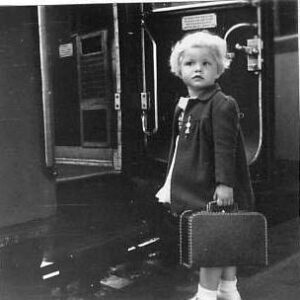
Life
My life began as a perfectly ordinary childhood. A wanted child, with loving parents. A perfectly ordinary childhood. Until my mother fell ill. And passed away two years later. My mother was no longer there. I was eight years old.
From living to surviving
From the moment my mother died – or rather, from the time my mother fell ill – my life changed from living to surviving. On the surface, my life simply carried on. ‘Titia has her own life,’ my father wrote when I was 10. He was right. But he could not have imagined, even in the wildest of dreams, just how right he was.
For the next thirty-five years, my life was all about survival. About holding on with all my might. ‘From the age of eight, I’ve been looking after myself emotionally,’ I didn’t even dare say out loud for the first time until quite recently.
That’s how I (survived) lived my life. At the cost of physical pain. Of always being tired. Long periods of (borderline) depression. Excessive alcohol consumption. Suicidal thoughts. Fear. Insecurity. Doubt. About everything. But most of all about myself. About my right to exist. No purpose in my life to which I could connect. I just did whatever came to mind. But: on the outside, I carried on. Outwardly, I seemed to be functioning.
From survival to living
Until, around the age of 45, I read the book ‘Motherless Daughters’ by Hope Edelman. See, I’m not mad! It wasn’t just myself I recognised. It also dawned on me that I wasn’t the only one who had lost her mother at a young age. That I wasn’t the only one who, so many years later, was still struggling with the loss of a parent in childhood. And that I was, undoubtedly, not the only one who didn’t feel understood in that regard. Let alone helped. My life changed once again.
Step by step, I went from surviving back to living. For the first time in my conscious life, I felt I had a purpose: to understand what was going on inside me. To acknowledge what was going on inside me. To explore. To process. To heal. To look for ways to help others with ‘Verlaat Verdriet’ in their quest. In their journey of discovery.
Life
Slowly but surely, my life took on a new shape. A shape that suited me. I gave a name to the consequences of losing a parent at a young age: ‘Verlaat Verdriet’ (Delayed Grief). My work on ‘Verlaat Verdriet’ didn’t just take shape; it also took on substance. For myself, but also for others experiencing ‘Verlaat Verdriet’. It grew into what you might call my life’s work. ‘I have given meaning to the loss of my mother. A meaning that is infinitely greater than just for me alone,’ I realised at the time I had breast cancer for the third time. And thought I wouldn’t survive that third time…
Survival has become living again.
I exist.
I have something to offer the world.
I matter.
Legacy
‘I’m not dead, am I?’ I thought when I first heard someone refer to my ‘Verlaat Verdriet´ work as ‘Titia’s legacy’. ‘I’m not dead, am I?’ No – ‘legacy’ isn’t about death. Legacy is about life. About my life. About what I have to pass on.
Casa Matilda in Codiponte, where old wounds can heal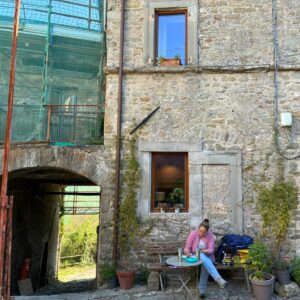
And so I’d like to take you to Codiponte/Casola in Lunigiana. To the house I’ve bought there. Where I’d like to establish a meeting place for ‘Verlaat Verdriet´ members. On the little square of CodiponteCastello. A place where people can stay who want to work on their life stories. Meet one another. Take courses or workshops together. Work together. Or simply seek out the silence to find their bearings. In Codiponte. Where old wounds can heal.
Self-help
* Celebrating your deceased parent’s birthday
Do you mark the anniversary of your deceased parent’s death? Connect with the parent who lived, and celebrate her/his birthday.
* A photo of you as a carefree child
Do you have a photo of yourself from your childhood in which you are looking out at the world with a carefree expression? Give this photo a special place, so that it catches your eye time and again for a while.
* Create a small altar in your home
Set up a ‘small altar’ in a visible spot in your home to honour your deceased parent. Place a candle by the altar that you light and keep burning as often as possible. Who knows, you might collect more precious items to place on the altar.
** ‘Verlaat Verdriet’ self-test. (available in German, English, French, Italian and Dutch)
The Self-tests will soon be available here in English.
*** Memorial document
Create a memorial document about your deceased parent. Below you will find a template for inspiration. You can download the file and design it yourself. You can use a notebook, create a special notebook.
English Memorial document Father
English Memorial document Mother
***** Dictionary of Emotions
The Dictionary of Emotions offers you the chance to explore your feelings in a playful, creative way. What do they mean to you right now? How do they affect you? As you work through it, you’ll not only get to know your feelings better, but you’ll also get to know yourself better.
Englisch Dictionary of Emotions
Books
Hope Edelman – Motherless Daughters. The legacy of loss
https://www.hopeedelman.com/books
Maxine Harris – The loss that is forever. The lifelong impact of the early death of a mother or father
https://www.amazon.com/Loss-That-Forever-Lifelong-Impact/dp/0452272688
* simple
** slightly more complicated
*** requires more effort
This translation was produced with the help of AI and authorised by our language consultants.
Tuetur et unit
Protect and unite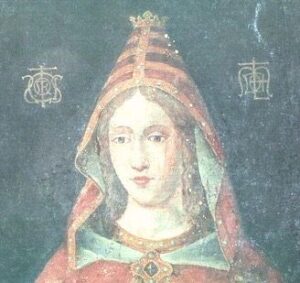
1046-1115
Grand Countess of Tuscany
Matilda lost her Father when she was six years old
#feelingsofloneliness #feelingsofbeingcutoff #solidified #lossofaparentduringchildhood #motherlessdaughters #delayedgrief #innerrupture #lategrief #deceasedparent #survivalmechanism #leftbehindgrief #dailyimpactoflategrief